Things to Do in Brussels, Belgium in 2026: Waffles, Grand Place, Museums, Beer, and Smart Day Trips
Things to Do in Brussels, Belgium in 2026: Waffles, Grand Place, Museums, Beer, and Smart Day Trips
- Why Brussels is worth visiting
- Quick planning basics before you go
- Explore Grand Place
- See Manneken Pis and Brussels' playful side
- Visit Mont des Arts for one of the best city views
- Best museums and cultural stops
- Brussels comic book culture
- What to eat and drink in Brussels
- Shopping, strolling, and city atmosphere
- Suggested Brussels itineraries
- Best day trips from Brussels
- Mistakes to avoid
- Experience-based travel advice
- Final thoughts
Why Brussels Is Worth Visiting
Brussels does not always dominate the dream list the way Paris, Rome, or Amsterdam do. That is exactly why it tends to exceed expectations. Travelers often arrive with moderate assumptions and leave realizing the city delivers a richer, more layered experience than they expected. Brussels is both stately and informal. It is historic without being frozen in time. It is political on paper, since it is deeply associated with European institutions, but in practice it feels warm, walkable, flavorful, and full of everyday pleasures.
The strongest reason to visit Brussels is not just that it has famous landmarks. It is that the city works well as a complete travel experience. You can walk through a UNESCO-recognized central square in the morning, eat a proper Belgian waffle in the afternoon, browse elegant shopping arcades, visit a museum, stop for chocolate, and end the day with good beer and a relaxed dinner without ever feeling like the city is forcing you into exhausting logistics.
Brussels also rewards different travel styles. First-time Europe travelers appreciate how compact the core sights are. Food-focused travelers love the easy access to waffles, fries, mussels, beer, and chocolate. Art lovers can build a satisfying museum itinerary. Travelers with extra time can use the city as a base for excellent day trips into the rest of Belgium. That flexibility gives Brussels more depth than some people realize before they arrive.
Another reason Brussels deserves more attention is its personality. Some cities impress you from a distance but feel impersonal up close. Brussels does the opposite. At first glance it may seem formal because of its grand architecture and institutional reputation. But once you spend a little time in the center, you notice its humor, its love of indulgence, its civic pride, and its refusal to take itself too seriously. A city that treats a tiny fountain statue as a beloved icon while also preserving magnificent squares and museums has a very particular charm.
In simple terms, Brussels is not a city you visit only to “check off” major landmarks. It is a city you enjoy through atmosphere. It is one of those places where the details matter: the façades around a square, the smell of warm waffles, the shine of old arcades, the surprising photo viewpoint, the side street that leads to a chocolate shop, the café where you pause longer than planned, and the satisfaction of realizing the city is much more than its stereotypes.
Quick Planning Basics Before You Go
Brussels is approachable, but planning well still improves the experience. One of the first things to understand is that the city center is very walkable. If you stay somewhere reasonably central, especially near Brussels Central Station or within easy reach of Grand Place, many of the highlights can be visited on foot. That saves time and makes the city feel more coherent because you experience the transitions between landmarks instead of constantly dipping in and out by transport.
Brussels is also a city where timing matters. Early mornings usually feel calmer around the biggest sights. Midday brings more energy, more crowds, and more lines in the most popular food areas. Evenings can be lovely, especially around illuminated historic spaces, but some travelers underestimate how much walking they will do and become too tired to enjoy the city’s nightlife or beer culture properly. A realistic pace works better than an overstuffed plan.
If you are deciding how long to stay, one full day gives you a decent overview of the essential highlights. Two days is noticeably better and allows time for museums, food breaks, and a more relaxed rhythm. Three days is ideal if you want both Brussels itself and one nearby day trip. The city is not overwhelming in scale, but it has enough variety that rushing through it reduces what makes it enjoyable.
One practical planning principle: do not treat Brussels as only a transfer city. Some travelers pass through because it is well connected by train and think of it as a quick stop between bigger names. That often leads to shallow visits and unfair conclusions. Brussels needs just enough time for you to settle into its rhythm. Once you do, the city makes much more sense.
Finally, be strategic with food expectations. Brussels is full of tempting snacks and indulgences, but it is easy to turn the entire day into random grazing and then miss the more meaningful side of Belgian food culture. A better approach is balance: one good waffle stop, one proper sit-down meal, one beer experience if that is your thing, and perhaps one chocolate-focused stop. That way the city feels delicious rather than excessive.
Explore Grand Place, the Heart of Brussels

If Brussels has one undeniable showpiece, it is Grand Place. This is the sight that instantly convinces many travelers the city deserves more credit. The square feels ceremonial without being lifeless. The surrounding guild houses, decorative façades, and grand civic buildings create the kind of urban stage set that is almost too ornate to seem real. Yet it does not feel like a museum space fenced off from normal life. People move through it constantly. Visitors take photos, guides explain the history, locals cross through, and cafés and surrounding streets keep the whole area alive.
The reason Grand Place works so well is not just architectural beauty. It is the sense of proportion and texture. The square feels enclosed enough to be dramatic, yet open enough to let the facades breathe. Even if you know it is famous, the real experience of standing there still lands with force. The buildings are richly decorated, the square holds light beautifully, and the surrounding movement gives it energy rather than stiffness.
The smartest way to experience Grand Place is not to rush in, take one photo, and leave. Visit it more than once if you can. See it in the morning when it feels calmer. Pass through again later when the city is busier. If you stay overnight, seeing the square in evening light adds another layer. The best public spaces are rarely one-note, and Grand Place changes mood depending on the time of day.
Travelers who enjoy history can deepen the visit by learning a little about the square’s role in Brussels’ development and the symbolic value of the surrounding buildings. But even if you are not a heavy history traveler, Grand Place still works because beauty communicates directly. You do not need to memorize dates to appreciate the craftsmanship, symmetry, and civic pride built into the place.
Practical tip: this is one of the best places in Brussels to orient yourself early in the trip. Once you understand where Grand Place sits relative to nearby streets, many of the city center highlights become easier to navigate on foot.
If you are the kind of traveler who likes to begin a city with its strongest visual statement, start here. It sets the tone well. Grand Place tells you immediately that Brussels is not a city of small rewards. It may unfold gradually in some ways, but it knows how to make a first impression.
See Manneken Pis and Understand Brussels’ Sense of Humor
One of the most famous sights in Brussels is also one of the smallest and most misunderstood. Manneken Pis is not impressive because of scale. It is impressive because of symbolism, affection, and the strange way it captures the city’s personality. Many first-time visitors hear about it, imagine something grander, and then react with surprise when they arrive. That reaction is common. But once you understand the cultural tone around it, the statue becomes more enjoyable.
The point is not that Manneken Pis is monumental in size. It is that Brussels has elevated this tiny, playful figure into one of its most recognizable emblems. There is civic humor in that. A city with extraordinary historic architecture and major political visibility still chooses to embrace a cheeky little statue as a central icon. That says something meaningful about local character.
Visitors often make the mistake of judging the stop too literally. If you expect it to function like a giant bucket-list monument, you will probably be underwhelmed. If you treat it as a cultural snapshot of Brussels at its most mischievous, it becomes much more charming. The tradition of dressing the statue in different costumes only deepens that sense of local playfulness.
It is also worth looking for Brussels’ related quirky sights rather than isolating this stop as a one-minute obligation. The city’s humor does not end with one fountain. Exploring nearby alleys and side streets with curiosity gives the visit more context and makes the central area feel more alive.
In experience terms, Manneken Pis is best approached with light expectations and a good attitude. Take the photo, smile at the absurdity, appreciate what it says about the city, and keep moving through the surrounding area. That is the right emotional scale for the stop.
Visit Mont des Arts for One of the Best Views in the City
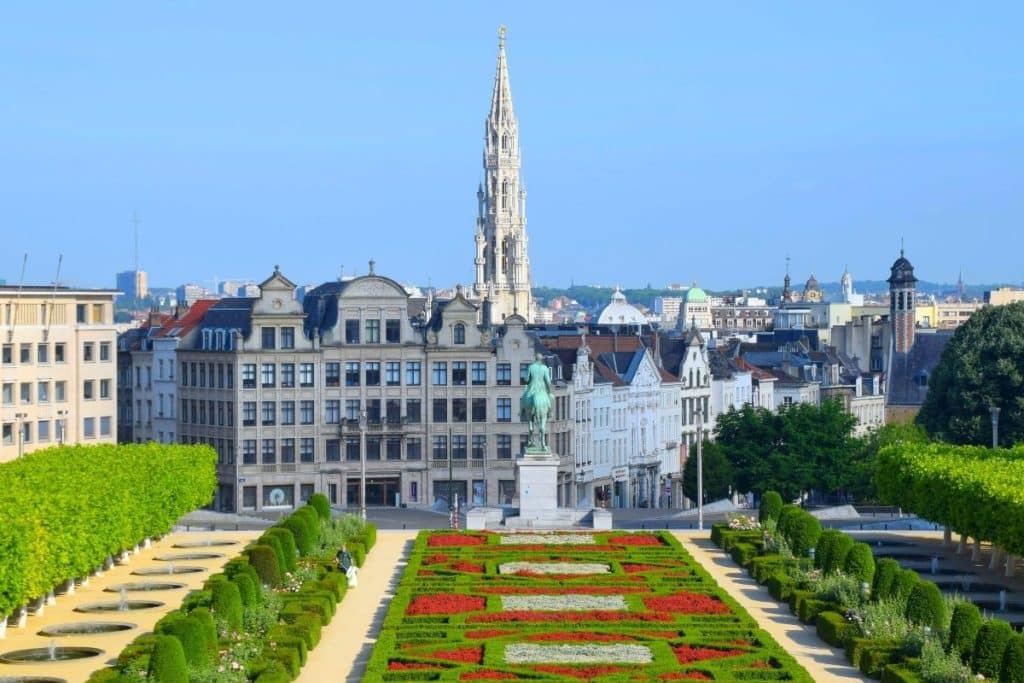
Mont des Arts is one of the most satisfying places in Brussels because it gives you something every city trip needs: perspective. Cities with strong architectural cores often become more meaningful once you see them from a slightly elevated viewpoint. Mont des Arts provides that beautifully. The gardens, the formal layout, the skyline, and the visual line pulling your eye toward the city create one of the most photogenic scenes in Brussels.
But the place is more than a photo stop. It also works as a transition point between city walking and culture. Because museums and major institutions cluster nearby, Mont des Arts fits naturally into an itinerary that combines views, art, and slower exploration. You can stop here for ten minutes or linger much longer depending on your pace.
This is also one of the best places to reset during a Brussels day. Many travelers underestimate how helpful a mid-itinerary pause can be. Cities become more memorable when you allow room for observation instead of constantly chasing the next stop. Mont des Arts rewards that slower rhythm. Sit, look, reorient yourself, and decide where the rest of the day should go.
If you enjoy photography, come with patience rather than urgency. The scene changes subtly with light, weather, and crowd flow. If you enjoy urban design, pay attention to how the gardens frame the view and create a ceremonial approach to the skyline. If you simply enjoy pretty places, Mont des Arts gives a visually satisfying break from narrower streets and dense façades.
In a city where food and architecture compete for attention, Mont des Arts quietly reminds you that Brussels also knows how to deliver a composed, elegant urban moment.
Best Museums and Cultural Stops in Brussels
Brussels rewards museum lovers more than casual summaries often suggest. This is important because many city guides reduce Brussels to food, one famous square, and a quirky statue. That version is incomplete. If your travel style benefits from art, history, or specialized collections, Brussels can become a richer destination very quickly.
A good cultural strategy in Brussels starts by accepting that you do not need to do every museum. Instead, choose based on your actual interests. Travelers who like broad historical context may enjoy the city-focused museums and civic collections. Those interested in design, material culture, or unusual collections may find the Musical Instruments Museum especially appealing. Art lovers often build their time around the fine arts institutions in the Mont des Arts area. Travelers with a military history interest can shape an entire half day around larger museum spaces connected to that theme.
The city’s museums also help balance the trip. Brussels can easily become indulgent in a pleasurable way: waffles, fries, beer, chocolate, shopping arcades, people-watching. None of that is bad. It is part of the city’s appeal. But a museum stop gives structure and depth. It creates contrast and makes the day feel more dimensional.
One practical advantage is that Brussels museum visits combine well with weather changes. If rain interrupts your outdoor walking plans, a cultural pivot is easy. That flexibility makes the city resilient as a travel destination. Some places collapse when the weather turns. Brussels still has meaningful indoor options.
For travelers who want to avoid museum fatigue, the best approach is selectivity. Pick one substantial museum and one lighter cultural stop rather than trying to cover too much in a single day. The point is to enrich the experience, not exhaust yourself inside galleries.
In experience terms, museums in Brussels are less about bragging rights and more about calibration. They help you understand what kind of city you are actually visiting: not just a snack-filled capital with pretty architecture, but a place with cultural weight, artistic identity, and historical layers that go well beyond first impressions.
Discover Brussels’ Comic Book Culture
One of the most distinctive aspects of Brussels is its relationship with comic art. This is not just a niche detail for collectors. It is a visible part of the city’s identity. The comic tradition adds personality, color, and cultural specificity to the urban environment. Even travelers who are not deeply invested in comic history can still appreciate how this element makes Brussels feel different from other European capitals.
The value of this theme lies in how it softens the city. Brussels has grand architecture and institutional importance, but comic culture keeps it playful. It gives the city another register, one that feels imaginative rather than purely formal. That matters because travel memories are rarely built from grandeur alone. They become stronger when a city reveals a unique cultural signature.
If you care about visual storytelling, design, or pop culture, this side of Brussels can be especially rewarding. If you do not, it still adds charm simply by being there. It is one more reminder that Brussels contains layers beyond the obvious.
For many travelers, the best way to enjoy this part of the city is not to turn it into an academic mission but to let it enrich the walk. Notice the murals, appreciate the references, and understand that Brussels takes cultural identity seriously in a way that still allows fun.
What to Eat and Drink in Brussels

Food is not a side note in Brussels. It is one of the main reasons the city becomes memorable. The challenge is not finding good things to eat. The challenge is keeping enough discipline to eat well without turning the day into a blur of sugar, starch, and impulse stops. A smart Brussels food strategy makes the city feel more rewarding and less chaotic.
Belgian waffles are an obvious starting point, but even here it helps to think beyond the photo. Waffles in Brussels are not just social-media props covered in excess. At their best, they are warm, fragrant, texturally satisfying, and connected to place in a very direct way. You can enjoy them simply or go for more elaborate toppings, but the key is timing. A waffle works best when it feels like a chosen indulgence, not just something you grabbed because every other person around you was doing the same.
Chocolate is another essential Brussels experience. The city’s reputation here is not accidental. Even travelers who are not chocolate obsessives usually enjoy browsing, tasting, or at least taking the subject seriously for part of the trip. The best mindset is curiosity rather than quantity. You do not need to buy huge amounts to appreciate the quality and presentation that make Belgian chocolate culture special.
Beer matters too, and in Brussels it can be approached in different ways depending on your travel style. Some people want a classic café experience. Others want a more educational or immersive beer-focused stop. Either way, beer in Brussels is less about mindless drinking and more about understanding how central it is to local culinary identity. Approach it with the same respect you would give wine in another destination.
Then there are the broader local favorites: fries, mussels, hearty dishes, and casual comfort food that makes the city feel grounded rather than precious. This side of Brussels matters because it balances the sweeter and more performative parts of the culinary scene. Not every meal should be a waffle or a chocolate stop. A satisfying trip includes something warm, savory, and genuinely filling.
Experience-based advice: avoid eating only in panic between sights. Brussels deserves a little structure. Pick one food experience you are excited about, one drink experience if relevant, and one proper meal. That gives the city room to impress you rather than overwhelm you.
Done well, food in Brussels becomes more than a checklist. It becomes one of the strongest reasons the city stays with you. The smell of waffles, the richness of chocolate, the satisfaction of local beer, and the comfort of a good Belgian meal all help Brussels feel lived-in, generous, and deeply enjoyable.
Shopping, Strolling, and the Pleasure of Wandering Brussels
Some cities are at their best when you follow a strict attraction list. Brussels is better when your plan includes room to wander. This is especially true around places like the Galeries Royales Saint-Hubert, where the joy comes not only from what you buy, but from the experience of moving through an elegant urban interior that still feels part of the city’s living texture.
Historic arcades matter because they let a city show refinement in an everyday form. You are not entering a palace or a museum. You are entering a shopping and strolling space that still carries architectural grace. That mix of beauty and casual use is one of Brussels’ strengths. It makes the city feel elevated without becoming inaccessible.
Beyond famous arcades, Brussels also rewards slow walking through side streets. Chocolate shops, cafés, small visual details, and street energy all contribute to the experience. If you move too fast, the city can feel like a sequence of separated attractions. If you walk attentively, it becomes more coherent. You start to feel how the central areas connect, where atmosphere shifts, and how small discoveries shape the day.
This matters especially for travelers who like cities that feel rich even when nothing major is “happening.” Brussels has that quality. You can enjoy a stretch of the day without ticking off a major site because the urban fabric itself is pleasant enough to carry the experience.
One practical tip: leave room in your schedule for non-productive wandering. Not every useful travel hour needs a formal purpose. In Brussels, some of the strongest moments come from letting the city unfold between planned stops.
Suggested Brussels Itineraries That Actually Feel Good in Real Life
A strong Brussels itinerary should reflect how the city actually works, not just how attractions look on a map. The most common mistake is over-planning a place that is best enjoyed with a bit of flexibility. Below are practical itinerary ideas that keep the experience realistic and satisfying.
Option A: One Full Day in Brussels
Start the morning at Grand Place while energy is high and crowds are still manageable. Spend enough time to actually appreciate the square. From there, explore nearby streets and see Manneken Pis without expecting it to carry the day. Continue toward Mont des Arts for a reset, a skyline moment, and easier access to nearby museum options.
In the afternoon, choose either one museum or a slower food-and-strolling approach. Late in the day, let Brussels become culinary: waffles, chocolate, a proper meal, or beer depending on your preference. This structure keeps the day balanced between landmark, culture, view, and pleasure.
Option B: Two Days in Brussels
Day one should focus on the historic core: Grand Place, the surrounding streets, Manneken Pis, the arcades, and one food-centered experience. Day two can lean more cultural and atmospheric: Mont des Arts, museums, comic culture, a more deliberate meal, and extra wandering time. This is arguably the best first-time format because it gives Brussels enough breathing room to become distinctive.
Option C: Three Days with a Day Trip
Spend two days on Brussels itself and reserve the third for somewhere like Ghent, Bruges, or Dinant. This is the sweet spot if you want a fuller Belgium impression without constant hotel changes. Brussels works very well as a base, and the added day trip gives your overall itinerary more emotional range.
The best itinerary is not the one with the most stops. It is the one that lets Brussels feel cohesive, flavorful, and memorable rather than rushed.
Best Day Trips from Brussels
One of Brussels’ biggest strengths is how well it connects you to the rest of Belgium. This is not a small bonus. It changes the strategic value of the city. Instead of thinking about Brussels only as a destination, you can also think of it as a well-positioned launch point for some of Belgium’s most rewarding secondary experiences.
Ghent
Ghent is a strong choice for travelers who want a city with beauty, history, and a slightly different energy from Brussels. It often appeals to people who like canals, heritage, and a lived-in urban atmosphere that still feels dynamic. If you enjoy places that are visually rich but not overly delicate, Ghent is a smart day-trip option.
Bruges
Bruges tends to attract travelers who want a more fairy-tale visual experience. It is ideal if your idea of a rewarding day trip includes canals, medieval charm, slower wandering, and strong postcard appeal. The danger is not that Bruges disappoints. It is that people over-romanticize it and then rush it. If you go with realistic expectations and enough patience, it can be very satisfying.
Dinant
Dinant is ideal for travelers who want scenery that feels more dramatically different from Brussels. The riverside setting, steep rock backdrop, and striking visual identity give it a distinctive mood. If your trip feels too urban and you want a place with sharper natural framing and a memorable silhouette, Dinant can be an excellent contrast.
The key to successful day-tripping from Brussels is restraint. Choose one destination that fits your taste rather than trying to force multiple places into a single rushed outing. Belgium may be well connected, but your emotional bandwidth still matters. One thoughtful day trip usually feels better than a frantic attempt to “see everything.”
If your schedule allows it, adding one well-chosen Belgian day trip makes Brussels feel even stronger as a base. It proves the city’s value not just as a capital, but as a gateway to a broader and more textured Belgium experience.
Mistakes to Avoid in Brussels
1. Treating Brussels as only a quick stop
This is the biggest mistake. If you give the city only a rushed half day between trains, you will likely miss what makes it enjoyable.
2. Expecting Manneken Pis to be a major monument
The stop works when approached with humor, not monument-level expectations.
3. Eating randomly all day
Waffles, fries, chocolate, and beer are great, but without structure your day can become physically tiring and less enjoyable.
4. Overloading the museum schedule
Brussels has worthwhile museums, but trying to do too many reduces the pleasure of the city outside them.
5. Planning day trips too aggressively
A good Belgium itinerary needs room for transit, weather, and simple enjoyment. One strong day trip is often enough.
6. Forgetting that atmosphere is part of the value
Brussels is not just about “doing” things. It is about enjoying the city’s texture, food, humor, and pacing.
Experience-Based Travel Advice for Brussels
Brussels is best when you resist the urge to rank every moment against Europe’s biggest icons. This matters because some travelers arrive comparing every square to Paris, every canal city to Amsterdam, every food scene to somewhere else. Brussels becomes more rewarding when you let it be itself. It is less about outperforming other capitals and more about delivering a wonderfully balanced city experience on its own terms.
Another useful mindset: do not confuse compactness with lack of depth. Because the center is manageable, some visitors assume Brussels is “easy” and therefore not substantial. In reality, manageable cities often deliver the best short-trip value because they reduce friction. You spend less time commuting and more time actually experiencing the place.
If you are a planner, build your days around anchors, not minute-by-minute schedules. One sight, one food goal, one cultural stop, and one area for flexible wandering is enough structure for most Brussels days. If you are a spontaneous traveler, still identify one or two must-do experiences so the trip does not drift too much.
If traveling as a couple, Brussels works especially well when you lean into rhythm rather than speed. Shared city views, pastries, arcades, and evening lights naturally support a more romantic pace. If traveling solo, the city is manageable and rewarding without feeling too small. If traveling with family, keeping the balance between landmark interest and snack-based morale is usually the key.
One of the best practical insights is to protect your energy. European city trips often fail not because the city is disappointing, but because travelers quietly burn themselves out with excessive walking, poor meal timing, and attraction overload. Brussels is enjoyable enough that it deserves your better energy, not the leftovers of a badly paced travel day.
The real secret to Brussels is simple: approach it with curiosity, appetite, and a little patience. The city does not need dramatic hype to work. It just needs enough time for you to notice what it is doing well.
Final Thoughts on Visiting Brussels
Brussels is one of those cities that proves travel value is not always about the loudest reputation. It has beauty, yes. It has famous sights, yes. But more importantly, it has a satisfying balance that many travelers quietly want: a magnificent central square, quirky local identity, strong museum options, excellent food pleasures, walkable sightseeing, and easy onward connections to other Belgian highlights.
That combination is hard to fake. Some cities give you one spectacular element but require effort to stitch the rest together. Brussels already feels integrated. The architecture, food, humor, and transport logic all support one another. That is why it works so well for both short stays and longer regional itineraries.
If you are planning a first visit, do not overcomplicate it. Start with Grand Place. Let Mont des Arts give you perspective. Accept Manneken Pis in the right spirit. Eat a real waffle. Make time for chocolate. Consider one museum. Walk slowly enough to notice the city beyond its icons. And if you have more time, use Brussels as a springboard into the rest of Belgium.
In the end, Brussels is not memorable because it shouts. It is memorable because it layers pleasure, beauty, and personality in a way that feels effortless once you are there. It is a city that can satisfy a first-time traveler, a food lover, a culture-seeker, and a smart itinerary planner all at once.
That is what makes it worth visiting in 2026 and beyond. Brussels may not always be the loudest name in Europe, but for many travelers it becomes one of the most pleasantly complete urban experiences on the trip.
Suggested slug: things-to-do-in-brussels-belgium-2026
Paps Hieronymos writes practical, experience-driven travel content for readers who want clearer itineraries, smarter budgeting, and more rewarding destination choices. His approach focuses on realistic travel rhythm, grounded planning, and human-centered advice that goes beyond thin tourist checklists.


0 comments:
Post a Comment